
Building Peace Through Music, Culture and Friendship
The following article comes from Gina Rowlands, Vice Principal at St Joseph’s College Ipswich, UK.
During May half-term 2026, we had the incredible opportunity to take part in a cultural exchange visit to Tokyo, Japan, in partnership Global School Alliance and Dalton School Tokyo.
We are extremely grateful to the Great Britain Sasakawa Foundation and the Daiwa Anglo-Japanese Foundation for their generous grants, which made this trip possible, as well as to the Global School Alliance for their support in organising the exchange, in particular Coco and Rita, the Global School Alliance guides, who looked after us so well whilst in Japan. The project was designed to promote intercultural understanding, peace and friendship through shared experiences, with music acting as a powerful bridge between young people from different cultures.
“Perhaps the most significant outcome of the trip was how much we grew in confidence, independence and global awareness.”
Exploring Japanese Culture
Our first impressions of Japan were immediate and unforgettable.
We were amazed by the cleanliness of the cities, the efficiency of the transport system and the respect that people showed towards one another in public spaces. We were fascinated by the contrast between Tokyo’s futuristic skyline and the deep-rooted traditions that remain such an important part of Japanese society.
Throughout the week, we explored some of Tokyo’s most significant cultural and historical landmarks. These included the Tokyo National Museum, Shinjuku Gyoen National Garden, the iconic Senso-ji Temple and the Origami Museum.
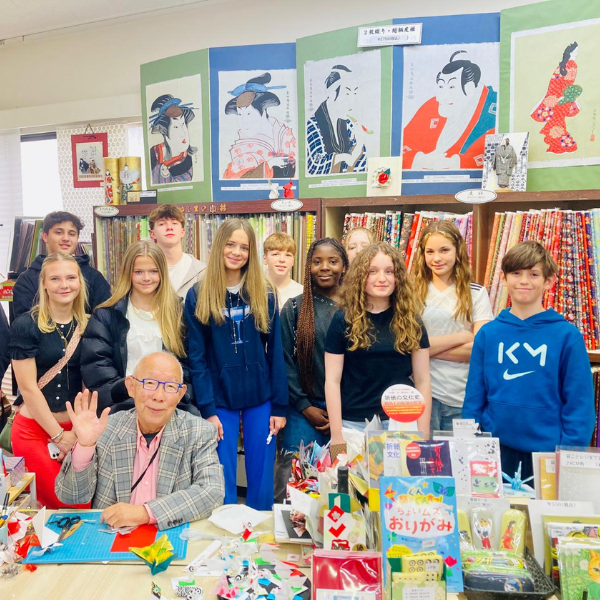
One of the highlights of the trip was meeting the internationally renowned origami master Kazuo Kobayashi, who gave us a live demonstration of his extraordinary skills. We were inspired to learn that Mr Kobayashi has led origami workshops for world leaders at a G8 summit hosted in Tokyo. Watching him transform a simple sheet of paper into intricate works of art showed us the patience, creativity and precision that are so highly valued in Japanese culture. We also tried making our own paper cranes, with varying success!
Authentic Collaboration:
Students Connecting Across Cultures
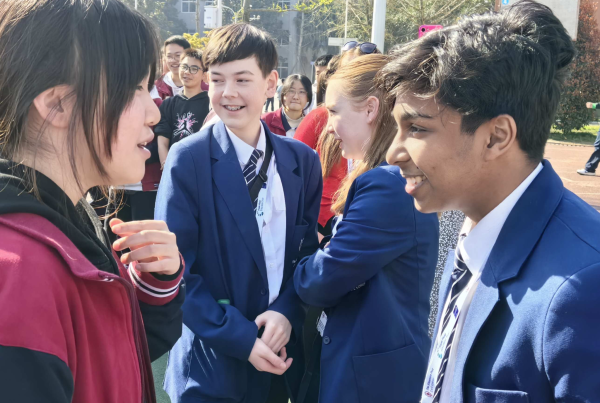
A major focus of the exchange was spending time with students from Dalton School Tokyo.
Through attending lessons, participating in collaborative activities and simply talking together, we gained valuable insights into life in a different education system while discovering many shared interests and ambitions. These interactions challenged our assumptions and showed us how international friendships can be built through curiosity, openness and mutual respect. As well as joined TikTok dances and shared Insta snaps! We also enjoyed putting our Japanese language skills into practice and learning new phrases from our hosts.
One of the most memorable parts of our time at Dalton School was an exceptional Noh theatre workshop led by the world-renowned performer Manjiro Tatsumi. Having performed internationally in cities including Rio, Rome and Paris, Mr Tatsumi introduced us to one of Japan’s oldest and most respected performing arts traditions.
We learned traditional Noh dance movements, explored the symbolism behind the performances and even had the rare opportunity to wear authentic Noh masks. The workshop brought Japanese cultural heritage to life and gave us a fascinating insight into an art form that has been passed down through generations.
Discovering New Perspectives
These experiences helped us develop a deeper understanding of Japanese history, values and identity.
We were particularly impressed by the importance placed on respect, mindfulness and community. For many of us, visiting Senso-ji Temple created a real sense of peace and belonging. We were also struck by the harmony between the bustling city and the beautiful natural spaces we encountered throughout Tokyo.
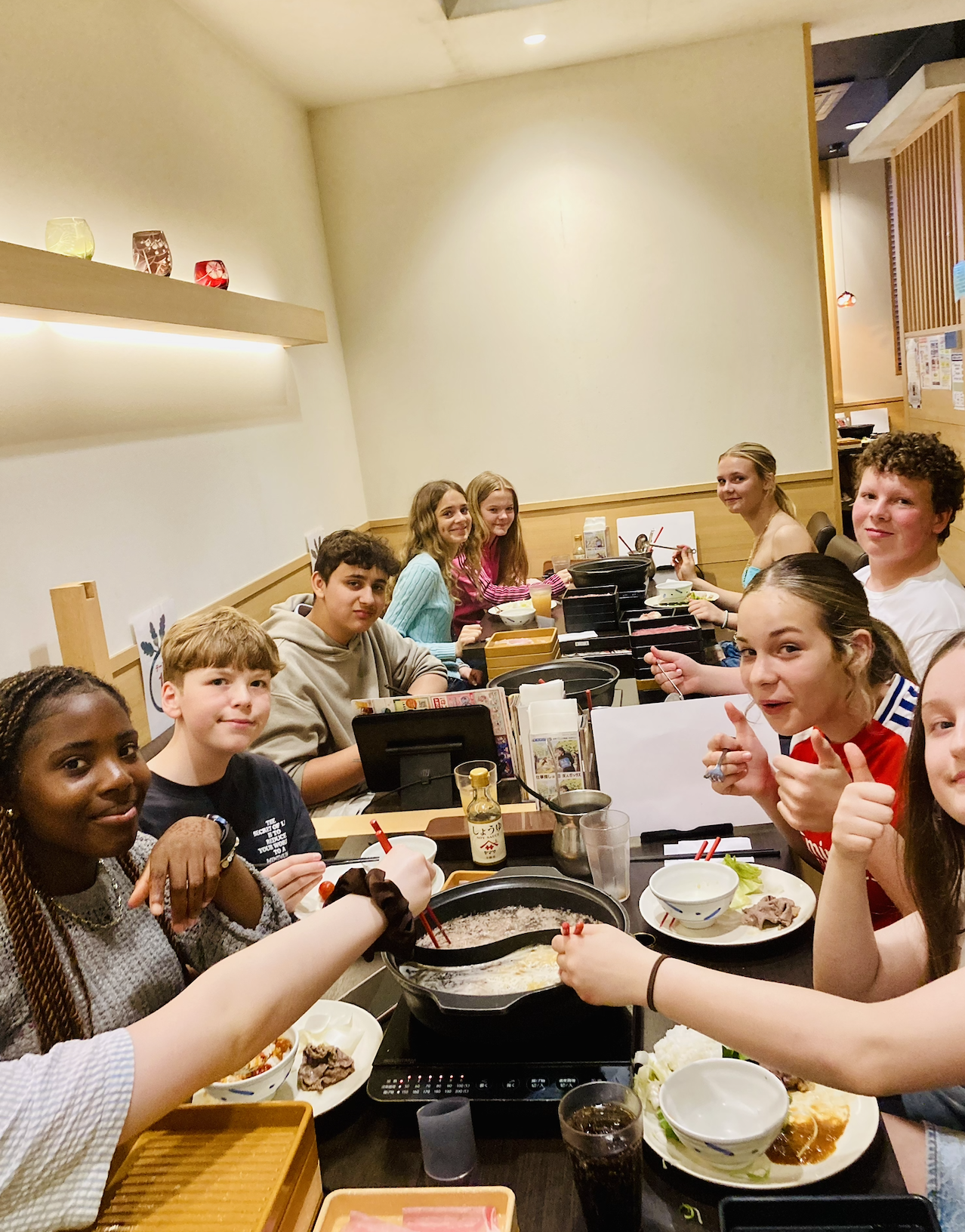
Food became another important window into Japanese life. During a sushi-making workshop and visits to local restaurants, we discovered how food can express culture and identity.
We compared Japanese and British eating habits and noticed how traditional customs continue to play an important role alongside modern lifestyles. People are very committed to zero food waste and so are always mindful to only take what they can eat.
We were also impressed by the pride people take in their surroundings and the strong sense of collective responsibility that contributes to Japan’s remarkably clean environment. We were reminded of the social etiquette not to walk whilst eating and drinking, something that took us time to adjust to.
Communicating Beyond Language
Music was at the heart of our exchange and reflected one of the project’s key aims: exploring how music can foster peace and understanding across cultures.
Through collaborative composition, rehearsal and performance activities, we worked alongside Japanese students to create shared musical experiences using modern technology through Vocaloid. We also had a fantastically fun time in a karaoke lounge also! We discovered that music can communicate ideas and emotions beyond language, helping us form friendships and connections that might otherwise have been difficult. It reminded us that music has the power to bring people together, celebrate diversity and promote understanding in a world that can sometimes focus more on differences than common ground.
We also explored how technology is shaping the future through visits to innovative digital exhibitions and learning centres at the NTT Labs. These experiences encouraged us to think about how technological advances can be used responsibly to connect people, solve global challenges and promote international cooperation.
Final Reflections
When we look back on our favourite memories, it is often the friendships we formed that stand out the most.
We valued the opportunity to learn from Japanese students, experience traditions we had previously only read about and see the world from a different perspective. Many of us hope to return to Japan one day.
By immersing ourselves in a different culture, engaging with Japanese students and reflecting on themes of peace, collaboration and cultural understanding, we developed skills and perspectives that will stay with us long after the trip has ended.
The support provided by Global School Alliance throughout the planning and delivery of the programme was excellent. The partnership model creates meaningful opportunities for sustained collaboration rather than simply a traditional educational visit. For us, the Japan Cultural Exchange was far more than a school trip.
It was an opportunity to learn from others, celebrate cultural diversity and discover how friendship, creativity and music can help build a more peaceful and connected world.