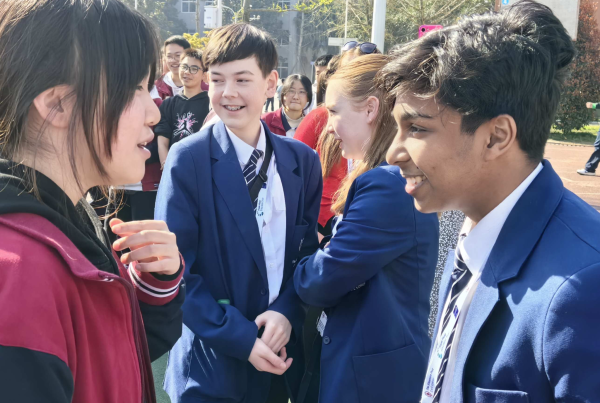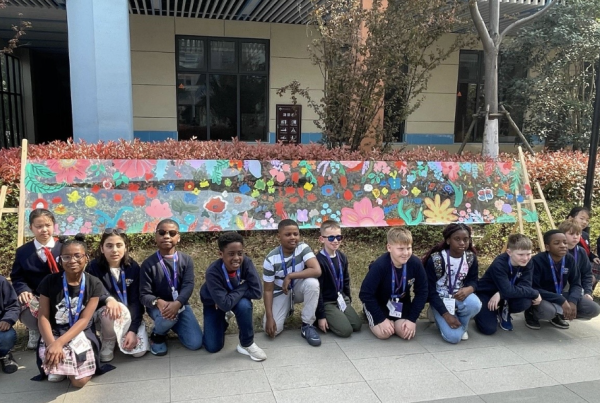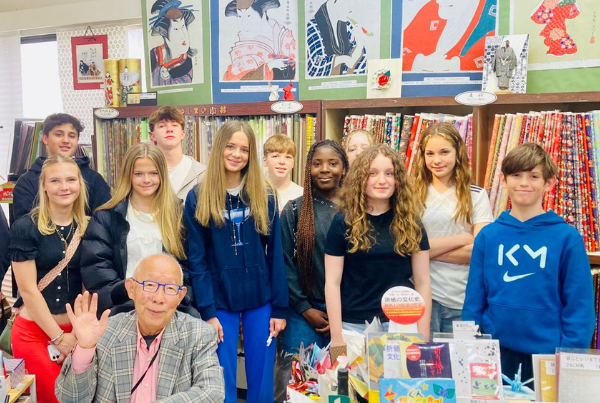

This is why we believe global experiences matter early.
Ryan’s story shows what can happen when a young person is exposed to different places, cultures and ways of thinking.
Curiosity grows, assumptions get challenged, confidence builds and adaptability becomes part of who you are. Years later, those same qualities are shaping the way he teaches, leads and understands the students in front of him.
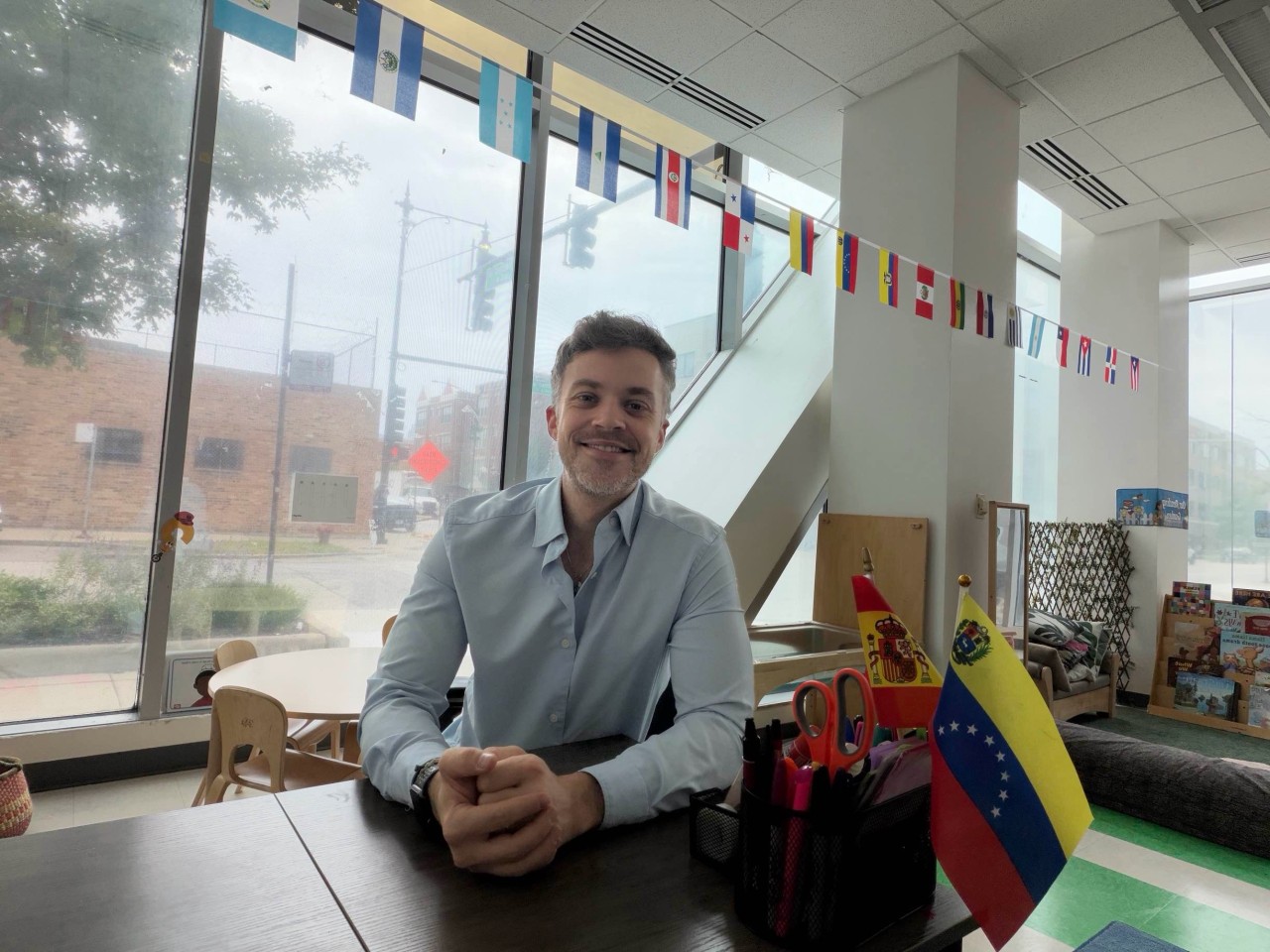
By Ryan Wilson, Early Years Teacher & Project Management UK | Spain | USA
I never set out to become a “global citizen”.
Looking back, it developed gradually, through experiences that made the world feel a little bigger.
Some of my earliest memories of travel are family holidays to Spain. We returned year after year, and I developed a real love for being somewhere different.
At the time, it was simply a holiday – different food, different languages. Looking back, those experiences planted the first seeds of curiosity about the world beyond home.
That curiosity grew. In my early twenties, I travelled further afield, exploring Europe and eventually Asia. I also started a small business working with suppliers in China, giving me early experience of a different cultural and professional context.
Travelling through Asia gave me a real shift in perspective. I began to realise just how much of the world existed beyond the environment I had grown up in. Millions of people were living lives completely different from mine, each with their own experiences, cultures, families, challenges and stories.
The world stopped feeling like a collection of countries to visit and started feeling like a collection of people to understand.
The unexpected opportunity
When I began my PGCE, I still assumed that my future would be fairly straightforward. I would qualify, find a teaching position in Northern Ireland and begin building my career there. I had no real plan to become an international teacher. That changed rather unexpectedly.
While I was still completing my PGCE, I was approached by a school in Barcelona. I was only around a month away from finishing my qualification and suddenly found myself considering something I hadn’t seriously thought about before.
Before long, I was fielding four offers across Madrid and Barcelona, subject to completing my qualification. Until then, teaching abroad had been something I had never really considered. Now I had to decide whether to take the familiar route I had originally planned or take a chance on something completely different.
I chose Madrid.
I’d visited Madrid twice before, so it felt like the safer choice compared with Barcelona. I knew the city a little, already had a connection to Spain through my travels, and it didn’t feel quite as unknown. But visiting somewhere and moving there are two very different things.
I packed my bags, said goodbye to home and found myself in a Madrid hotel room, about to begin my career as a newly qualified teacher for the British Council.
Becoming the newcomer
The first few weeks were challenging in ways I hadn’t anticipated. Professionally, my cohort surprised me. Many had very limited English, and I quickly realised I wasn’t simply teaching the British curriculum in another country. I was also teaching children learning through a language that was not yet familiar to them.
My PGCE had given me the foundations. But I quickly realised that I needed to build the rest of the house differently. The principles and pedagogy were still there, but the strategies, resources and approaches I had imagined using needed to change to meet the children in front of me.
While figuring that out professionally, I was also learning how to live in Madrid.
I didn’t know anyone. I had arrived in the middle of August, when it seemed as though the entire city had left for the summer. My two weeks in a hotel were disappearing quickly, while agencies were closed, landlords were away and finding an apartment felt almost impossible.
Everything that had once been automatic became a small challenge.
I didn’t have a car. I had to learn the Metro and navigate unfamiliar supermarkets. Everything around me was in Spanish. Even ordering a coffee sometimes required a moment of thought — and, occasionally, a quick translation.
I was learning to build a life while learning to teach in a completely new environment.
Then I realised something that would fundamentally change the way I thought about my students: I was experiencing, in a small way, what they were experiencing every day.
I was living in Spanish without always having the language to express what I wanted. My students were learning in English without always having that language either.
My experience was obviously different. I was an adult who had chosen to move to Spain, with the resources and agency to do so. But for the first time, I had a personal understanding of what it felt like when the world around you makes sense, but the language doesn’t always come easily.
It made me slow down and listen more carefully.
It made me more conscious that when a child doesn’t immediately understand, communicate or participate as we expect, there may be far more beneath the surface than we see.
Seeing my students differently
Before Madrid, I understood learning another language intellectually. Living it made that understanding personal. I began to notice the small things differently.
The child who knew exactly what they wanted to say but couldn’t find the English words. The child who watched another child before joining in because they weren’t quite sure what was expected. The child who understood far more than they were able to express. The child who might appear quiet, hesitant or disengaged when, in reality, they were simply trying to make sense of what was happening around them.
I became more conscious of the difference between not knowing and not being capable.
That distinction has stayed with me throughout my career.
When a child doesn’t immediately respond, participate or understand, my first instinct is no longer to ask, “Why aren’t they doing this?”
I’m more likely to ask:
“What might be getting in the way?”
Perhaps it’s the language, environment, expectations or simply needing more time. Or perhaps they need someone to show them it’s okay not to know yet.
Madrid didn’t give me the same experience as my students, but it gave me a window into what it feels like to be surrounded by things familiar to everyone else but not yet familiar to you.
It reminded me that sometimes the most important thing a teacher can offer isn’t another instruction or correction.
It is the feeling that they belong here, even while they are still figuring everything else out.
I also understood that children don’t arrive at school as blank canvases.
They arrive with languages, cultures, family experiences, expectations and ways of understanding the world developed long before they enter our classroom.
Our job isn’t to erase those differences. It is to understand them.
Learning to adapt
Moving to Madrid also challenged something else I had assumed about teaching.
I had spent a year learning to become a teacher and initially thought good practice could simply transfer from one setting to another. The foundations travelled with me: my understanding of child development, planning, observation, assessment and pedagogy remained important. But the context had changed.
My students were learning through English, many while still developing their language skills. That meant thinking differently about communication, introducing concepts, supporting understanding and creating opportunities for children to demonstrate what they knew.
Sometimes the barrier wasn’t the learning itself. It was the language through which the learning was being delivered. Sometimes I needed to model differently, use more visual support, give a child more time or approach learning through a different route. The important lesson was that adapting my teaching didn’t mean abandoning what I knew.
It meant being willing to reconsider how I applied it.
I had to become comfortable with not knowing, asking questions, listening and observing before assuming. I had to accept that someone else’s way of doing something might be different from mine without necessarily being wrong.
That lesson didn’t end when I left Madrid.
When I later moved to Chicago, I found myself doing it all over again at the British International School of Chicago.
The school culture, colleagues and expectations were different.
Again, I had to listen, observe and learn.
Each move has reminded me there is rarely one perfect way to teach. There are principles that travel with us, but the way we bring those principles to life has to respond to the people, culture and environment around us.
So, what does it mean to be a global citizen?
The more I have travelled and taught internationally, the more I have questioned what it actually means to be a global citizen.
For a long time, I associated it with travel: visiting lots of countries, experiencing different cultures and perhaps speaking more than one language.
I see it differently now.
I think being a global citizen is less about how many places you’ve been and more about how willing you are to learn from the people and perspectives you encounter.
It is being willing to ask “Why?” rather than deciding that something is wrong simply because it is different from what you know.
It is recognising that your own experience is only one way of seeing the world. It is being willing to adapt when the environment around you changes. And perhaps most importantly, it is having enough empathy to recognise that you rarely know the whole story of the person standing in front of you.
My experiences of living abroad have repeatedly reminded me of that.
- I’ve been the person who didn’t understand the language.
- I’ve been the person who didn’t know the routines.
- I’ve been the person watching others navigate something effortlessly while I was still working it out.
- I’ve been the newcomer.
- And each time, I’ve had to become comfortable with being the learner.
Bringing it to the classroom
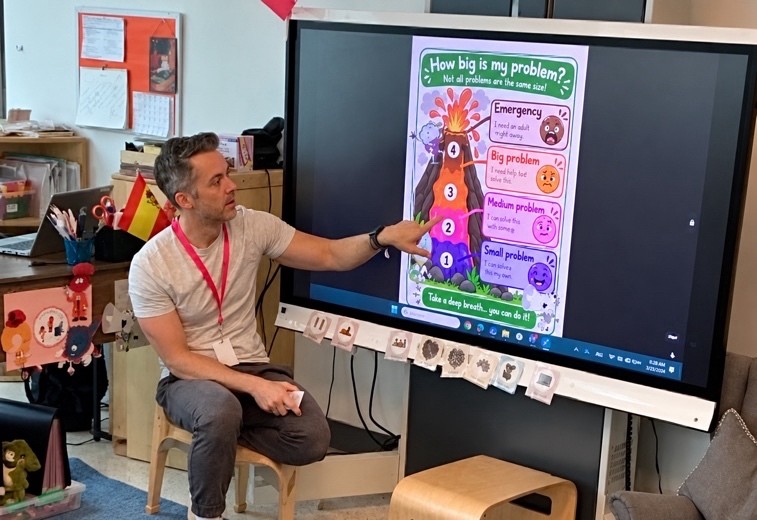
I think the classroom is ultimately where global citizenship starts. Not simply in lessons about different countries, cultures or traditions, but in the everyday culture we create in our classrooms.
Children are growing up alongside people who may speak different languages, have different traditions or have family connections to unfamiliar places. They are already surrounded by difference. Our role isn’t simply to teach them that difference exists. It is to help them become comfortable with it.
To be curious rather than fearful. To listen rather than assume. To understand that somebody else can experience the world differently from them without either person being wrong.
But I also think global citizenship starts with the adults in the room.
It is difficult to encourage children to be open-minded if we aren’t prepared to challenge our own assumptions. It is difficult to ask children to embrace unfamiliarity if we always retreat towards what we know.
Perhaps one of the greatest lessons of teaching internationally has therefore been that global citizenship isn’t something I can simply teach children.
It is something I have to model.
I never set out to become a global citizen.
It happened gradually — through travel, moving abroad, becoming the newcomer, learning from colleagues and, most importantly, from the children and families in front of me.
From Northern Ireland to Madrid to Chicago, each experience has made the world feel a little bigger and my own assumptions a little smaller. I moved abroad thinking I was going somewhere to teach. What I didn’t realise was that I was also going somewhere to learn.
The world is no longer just a collection of destinations to me. It is a collection of people, perspectives and stories — each offering something to learn from.
And perhaps that is the greatest lesson international teaching has given me:
There is always something to learn somewhere.
Have a perspective worth sharing?
We’re always looking for educators, school leaders and global citizens to contribute their experiences, ideas and lessons to the GSA community. Become a Global Contributor and add your voice to the conversation. Share your story with us here.